
Facial Contouring
Facial Contouring
This is a facial contouring procedure that improves facial contours through a precise diagnosis of the condition of the skeletal structure and muscles.
- Anesthesia
- General Anesthesia
- Hospitalization
- Same-Day Discharge
- Surgery time
- About 1 hour
Overview
Facial contouring is a surgical procedure designed to be customized for each individual after assessing the development of the facial skeleton and muscles and conducting a precise 3D-CT scan. It improves facial contours by considering the specific characteristics of each area—such as the jawline, cheekbones, and chin—and is performed using tools like ultrasonic bone cutters that target only bone tissue.
Features

POINT 01 — Customized Design by Body Area
We tailor facial contouring plans individually, taking into account the skeletal structure and muscle characteristics of each specific area.
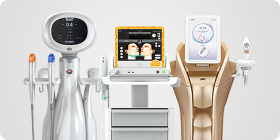
POINT 02 — Use of verified devices
We perform procedures using proven equipment, such as ultrasonic bone cutters.
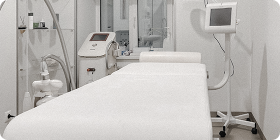
POINT 03 — Aftercare
We provide post-operative care for issues that may arise after surgery, such as swelling and bruising.
Methods
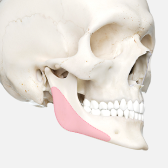
TYPE 01 — Square Jaw Reduction Surgery
We plan natural facial contours by taking into account the development of the facial bones, the location of nerve pathways, and the thickness of muscles and fat.
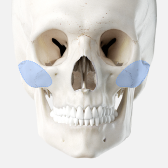
TYPE 02 — Cheek Augmentation
We determine the ideal cheekbone angle for your face shape and plan a voluminous contour line in conjunction with cheekbone reduction.
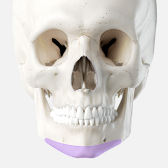
TYPE 03 — Chin Augmentation
We design the jawline to suit each individual’s specific case—such as a receding chin, a short chin, or a long chin—while considering the proportions relative to the face’s central axis.
Products and equipment
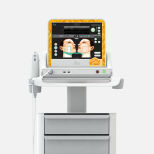
Ulthera
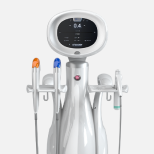
Shurink Universe
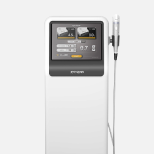
10THERA
V-RO
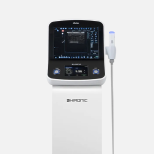
Doublo
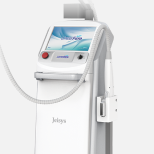
LinearFirm
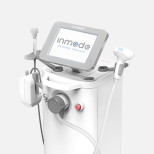
InMode
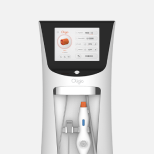
Oligio
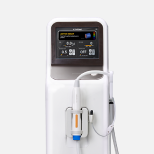
10THERMA
Treatment steps

STEP 01 — Consultation and Skeletal Diagnosis
We assess the development of the skeletal and muscular systems to identify desired contours and areas for improvement, and determine whether surgery is necessary.
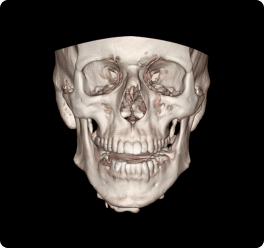
STEP 02 — 3D-CT Precision Examination
After a detailed examination, we analyze your skeletal structure and proceed with a customized design.
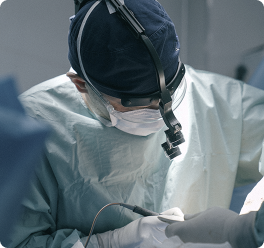
STEP 03 — Custom Incisions and Surgery
Depending on the surgical site and design, incisions are made to conceal scars—such as on the scalp, inside the mouth, in front of the ear, or under the chin—following sedation.
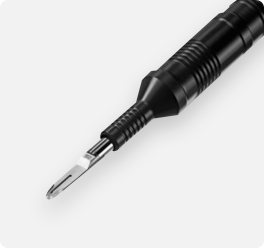
STEP 04 — Using this scalpel
We use “Bone Scalpel,” an ultrasonic bone cutter that reacts only to bone, to protect nerves and prevent bone loss.
Questions and answers
How long does the procedure take, and what is the recovery period?
This varies depending on the area and extent of treatment; detailed information will be provided following an examination and consultation.
Where do scars form?
Incisions are planned in areas that are not easily visible, such as the scalp, inside the mouth, in front of the ears, and under the chin.
How is anesthesia administered?
Depending on the nature of the procedure, it is performed under general or sedation anesthesia, and guidance is provided based on the individual’s condition.
Recommended for
- For those concerned about angular facial features, such as a square jawline or prominent cheekbones
- People who want to improve the shape of their chin, such as those with a receding or short chin
- Those looking to improve the contours of their facial structure
Precautions
- Facial contouring procedures vary in method and scope depending on the patient’s skeletal structure.
- Eligibility for surgery is determined through a 3D-CT precision scan and a consultation.
- Swelling and recovery vary from person to person; post-operative care instructions will be provided.