Causes and Contraindications to Know Before Mole Removal in Cheongju
2025-04-09T00:00:00+00:00
This article was written by Forever Clinic Cheongju, located at Gangseo-ro, Heungdeok-gu, Cheongju-si, Chungcheongbuk-do, in compliance with Article 56, Paragraph 1 of the Medical Service Act.
It provides information that may be helpful to those researching skin conditions and diseases.
Swelling, pain, bruising, and other side effects and results may vary depending on the individual. We recommend consulting with a medical professional before the procedure.
Can I remove a mole that makeup can't hide?
Hello, this is Baek Doo-san from Forever Clinic Cheongju.
A single mole on the face can change one's overall impression.
While it can sometimes be a charming point that enhances individuality, it can also give a dull and tired impression.
Especially if it appears on the central part of the face, around the eyes, or mouth, it can significantly influence one's appearance.
Therefore, the number of people considering 'mole removal in Cheongju' is steadily increasing.
However, not all moles are candidates for removal, so they should not be removed carelessly.
Today, we will provide information on the causes of mole formation and representative cases that require careful consideration.
The causes of
moles on the skin
are diverse.
The lesions we commonly call 'moles' are medically referred to as 'melanocytic nevi'.
These melanocytes are cells that determine skin color. When they excessively accumulate in a specific area due to congenital factors, UV exposure, hormonal changes, etc., they appear as lesions.
Nevi are broadly classified into three types based on the layer they are located in:
Epidermal nevi are mainly located in the epidermis and are often flat and hairless.
Dermal nevi are located deeper than epidermal nevi and tend to be raised or protruding.
Compound nevi span both the epidermis and dermis and are relatively more challenging to treat.
The removal method and approach
can differ
depending on how they look
and where they are located.
It's easy to think that they can simply be removed with a laser, but accurate diagnosis is necessary for safer treatment.
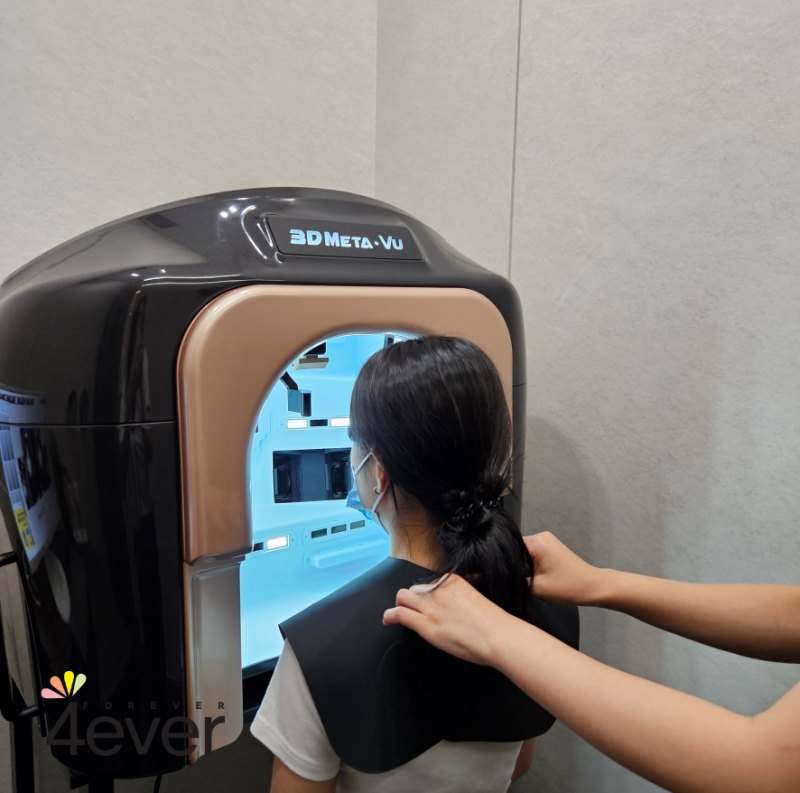
In which cases
are they contraindicated?
One of the reasons why mole removal in Cheongju requires careful consideration is the 'differentiation from cancer'.
Melanoma, a representative skin cancer, can be difficult to distinguish from ordinary nevi in its early stages.
If a mole exhibits the following symptoms, a biopsy or accurate examination must precede laser treatment.
1) Asymmetrical shape (left-right)
2) Blurred or irregular borders
3) Mixed colors
4) Recent increase in size
5) Itching, bleeding, or pain
If even one of these symptoms applies,
rather than removing it carelessly,
it is important to first understand
the nature of the lesion
and establish a safe plan.
Shallow moles
can be removed with a laser.
If the mole is an epidermal nevus that does not fall under the contraindications mentioned above, it can be easily reduced using a laser.
The risk of recurrence is also relatively low.
However, dermal or compound nevi require deeper removal.
If excessive heat energy is applied too deeply at this stage, it can cause wounds and potentially lead to scarring.
Instead of trying to remove it completely from the start, designing a treatment plan to reduce its size and color is also an option.
Furthermore, a single session may not be sufficient. To reduce the risk of recurrence, undergoing multiple sessions may be a better choice.
Do you now understand a little better why even a single mole should not be removed carelessly?
While many people nowadays consider mole removal in Cheongju lightly, it is actually a procedure that requires careful judgment.
More important than whether it's a 'beauty mark' or not,
is accurately assessing the current condition,
and choosing
a safe method
that is right for you.
If you have been concerned about an unremovable nevus, we recommend starting by checking if removal is possible.
*This post was written by Forever Clinic Cheongju in accordance with Article 56 of the Medical Service Act and includes medical advertising content.
Back to list