What happens to your skin in the first 72 hours after treatment?
2026.09.18

The 72 hours that matter beyond treatment: the golden window when your skin completes the result
Whether you have laser treatment or injections, your skin gets to work the moment the procedure ends.
Even when the surface looks calm, important recovery processes are beginning underneath. The first 72 hours after treatment are when the course of that recovery can vary most. Kelva calls this the “golden window” and designs its aftercare around it.
Put simply, the first 72 hours are less about applying more products and more about protecting your skin as its barrier settles back into place. How you spend this time can affect the final result. Forever Clinic Myeongdong, which prescribes or sells Kelva after treatment, places as much importance on care during this window as on the procedure itself.
This article is not a recommendation for a particular product. We will walk through what happens inside the skin after treatment and what helps you work with that process. Understanding the principles makes it easier to assess your aftercare.
At a glance
- The first 72 hours after treatment are a critical window for the skin barrier to recover.
- During this time, increased transepidermal water loss (TEWL) can leave skin more sensitive and dry than usual.
- The key is to do less: reduce irritation and maintain an environment in which the barrier can recover.
- Soothing, hydration, sealing in moisture and sun protection are the four pillars of care during this window.
- Results vary considerably. Guidance specific to the treatment you received is the most relevant.
Why are the first 72 hours called a “golden window”?
Because this is when the skin barrier begins to rebuild.
Laser treatments, injections and peels deliberately stimulate the skin to trigger a recovery response. Immediately afterward, the skin’s outermost protective barrier can temporarily become less intact than usual.
“My treatment went well, so why does my skin feel so sensitive afterward?”
While the barrier is less intact, skin loses moisture faster and reacts more sensitively to external irritation. These changes tend to be greatest in the first few days after treatment, which is why we call this a critical, or golden, window.
💡 Think of treatment as opening a door. Care during the golden window helps that door close properly. Preserving the conditions for recovery comes before adding more products.
What does a weakened skin barrier mean?
The skin barrier is often compared to bricks and mortar.
The skin’s outermost cells are the bricks, and the lipids between them, including ceramides, are the mortar. When this structure is tightly packed, it retains moisture and keeps irritants out. After treatment, the bonds within that mortar can temporarily loosen, allowing moisture to escape more easily.
The amount of water that evaporates through the skin is called transepidermal water loss, or TEWL. It stays lower when the barrier is intact and rises when the barrier is disrupted.
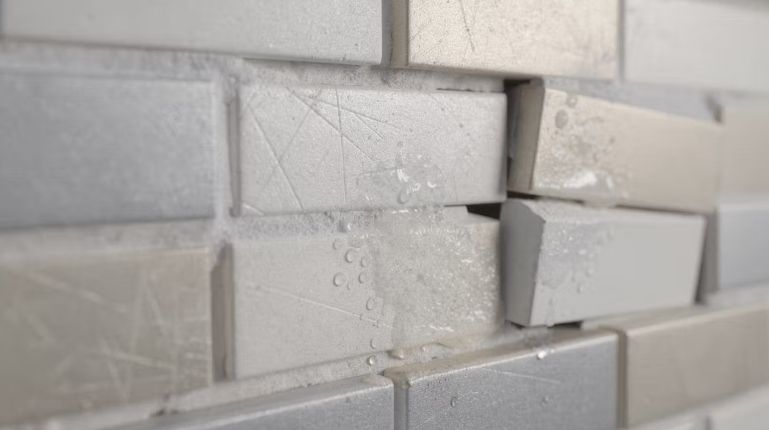
A moisture-rich skin barrier, tightly arranged like bricks and mortar, with a small gap at one edge.
⚠️ Bear in mind: tightness and dryness after treatment often occur because a temporarily weakened barrier lets more moisture escape. This can be part of recovery rather than a sign of a problem, and it is one reason barrier care matters so much during this time.
What should you focus on during the golden window?
Kelva bases its first-72-hours aftercare on four pillars. The aim is to provide what recovery needs, rather than add elaborate functions.
1. Soothe: help unsettled skin calm down
The first step is to calm the skin, rather than add more. Skin sensitized by treatment may struggle with potent active ingredients or repeated irritation. Reducing irritants and giving skin space to settle should come first.
2. Hydrate: replace escaping moisture
A weakened barrier allows moisture to evaporate faster than usual. Adequate hydration and an environment that helps retain it are therefore important. This is the stage where Kelva 72 Barrier Mist is used to soothe and hydrate skin after treatment.
3. Seal: keep that moisture in
Once moisture has been supplied, the surface needs to be sealed to help prevent it from escaping again. This is the idea behind “Fracture & Seal,” also a motif on Kelva’s packaging. Kelva 72 Barrier Cream adds a sealing layer over the barrier disrupted by treatment.
4. Sun protection: protect recovering skin
Skin with a weakened barrier is particularly vulnerable to UV exposure. Gentle sun protection is the final pillar of care. Kelva 72 Barrier Sunscreen provides the protection step designed for this period.
What to avoid after treatment
Understanding the principles also makes it clearer what to avoid. The following habits can disrupt skin during the golden window.
- Using potent active ingredients immediately: concentrated acids or strong exfoliants can burden a sensitized barrier. It is safer to hold off during this period.
- Overloading skin with too many steps: focus on soothing, hydration, sealing and protection instead of layering every product said to be beneficial. Keep care simple.
- Skipping sun protection: UV exposure places particular stress on recovering skin. It is best to keep the protection step even when you are not going out.
- Ignoring your treatment instructions: recovery and precautions differ by procedure. Advice specific to your treatment takes priority over general aftercare principles.
Aftercare is not about adding a long list of supposedly beneficial steps. It is about protecting the skin’s own barrier-rebuilding process without disrupting it. That is how to make the most of the golden window.
Frequently asked questions
Why are the first 72 hours so important?
This is when the skin barrier starts to recover. Immediately after treatment, the barrier can temporarily weaken, losing moisture quickly and becoming more sensitive to irritants. Care during this period can affect the final result, although recovery varies greatly by procedure and individual.
Can I keep using my usual skincare products after treatment?
Strong products, such as concentrated acids and potent exfoliants, can burden a sensitized barrier, so holding off is recommended during this period. Keep your routine focused on soothing, hydration, sealing and sun protection. Follow treatment-specific advice about which products you can use.
What exactly is transepidermal water loss (TEWL)?
It measures how much water evaporates through the skin. TEWL stays lower with an intact barrier and rises when treatment or other factors disrupt it. This is why replenishing moisture and sealing the surface to retain it are important during the golden window.
What has been tested for Kelva Barrier Cream?
In a human application study by the Korea Dermatology Research Institute, the product was found to help improve a skin barrier affected by external physical stimulation immediately after a single use (p<.001). No adverse skin reactions were reported during the study. These findings apply to that product’s test; the degree and timing of perceived effects vary by person.
How many days should I pay special attention to aftercare?
The golden window, when the barrier is most unsettled, generally covers the first few days after treatment. The precise duration and precautions depend on the type and intensity of the procedure. Treatment-specific guidance is more useful than relying on general principles alone.
In summary
The first 72 hours after treatment are about protecting a disrupted skin barrier as it settles back into place, rather than applying more products. During this golden window, the weakened barrier loses moisture more quickly and becomes sensitive. Soothing, hydration, sealing and sun protection form the foundation of care.
The key is to simplify. Provide what recovery needs and remove unnecessary irritants instead of layering every product said to help. This is also the principle behind Kelva’s approach to the first 72 hours.
Treatment opens the skin’s door; care during the golden window helps it close properly. Keeping these principles in mind can change how you assess what your skin needs after your next treatment.